

Hey there, fellow billiard enthusiasts! I'm stoked to chat with you about one of the most frequently asked questions in the billiards world: Can I make my own billiard pool cue? As a supplier of high-quality Billiard Pool Cue, I've heard this question a ton, and I'm here to break it down for you.
The Allure of DIY Pool Cues
First off, I totally get the appeal of making your own pool cue. There's something incredibly satisfying about creating a piece of equipment that you'll use to battle it out on the felt. You get to put your personal touch on it, customizing every aspect from the wood grain to the tip. It's like having a signature weapon that tells the world, "This is me, and I'm here to win."

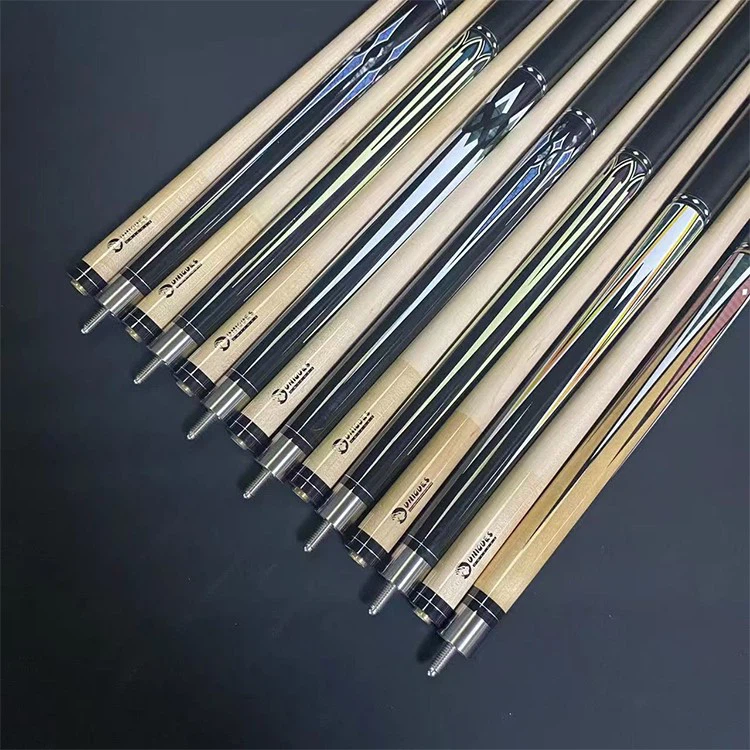
But before you dive headfirst into a DIY pool cue project, let's take a look at what it actually entails.
The Basics of Pool Cue Construction
Making a pool cue is no walk in the park. It's a complex process that requires a fair amount of skill, patience, and the right tools. Here's a quick rundown of the main components of a pool cue:
- Shaft: This is the skinny end of the cue that makes contact with the ball. Shafts are typically made from high-quality wood, like maple, and are carefully tapered to provide the right amount of flexibility and control.
- Butt: The butt is the thicker end of the cue that you hold onto. It can be made from a variety of materials, including wood, plastic, or carbon fiber, and is often adorned with decorative elements like inlays or wraps.
- Joint: The joint connects the shaft to the butt and allows you to adjust the length and balance of the cue. There are several different types of joints, each with its own unique characteristics.
- Tip: The tip is the small piece of leather or other material that makes contact with the ball. It's important to choose a high-quality tip that provides good grip and control.
The Tools You'll Need
To make your own pool cue, you'll need a few specialized tools, including:
- Lathe: A lathe is a machine that rotates the wood while you shape it with cutting tools. It's an essential tool for pool cue construction, as it allows you to create the smooth, straight surfaces that are necessary for a good cue.
- Router: A router is a power tool that's used to cut grooves and channels in the wood. It's often used to create the inlays and decorations on the cue butt.
- Drill Press: A drill press is a tool that's used to drill holes in the wood. It's important to use a drill press to ensure that the holes are straight and consistent.
- Sandpaper: Sandpaper is used to smooth the surfaces of the wood and prepare it for finishing. You'll need a variety of grits of sandpaper, from coarse to fine, to get the job done.
- Glue and Clamps: Glue and clamps are used to hold the different parts of the cue together during the construction process. It's important to use a high-quality glue that will provide a strong, durable bond.
The Process of Making a Pool Cue
Now that you have an idea of what's involved in pool cue construction and the tools you'll need, let's take a look at the step-by-step process of making a pool cue:
- Select Your Wood: The first step in making a pool cue is to select the wood for the shaft and butt. You'll want to choose a high-quality wood that's straight, strong, and free of defects. Maple is a popular choice for pool cue shafts, as it provides a good balance of strength and flexibility.
- Cut the Wood: Once you've selected your wood, you'll need to cut it to the appropriate length and width. You can use a saw or a bandsaw to make the cuts.
- Shape the Shaft: The next step is to shape the shaft. You'll use a lathe to turn the wood into a tapered cylinder, with the smaller end of the shaft being the tip and the larger end being the joint.
- Install the Tip: Once the shaft is shaped, you'll need to install the tip. You can use a tip installation tool to attach the tip to the end of the shaft.
- Shape the Butt: The next step is to shape the butt. You'll use a lathe to turn the wood into a cylinder, and then you'll use a router to create the inlays and decorations on the butt.
- Install the Joint: Once the butt is shaped, you'll need to install the joint. You can use a joint installation tool to attach the joint to the butt.
- Assemble the Cue: The final step is to assemble the cue. You'll use glue and clamps to attach the shaft to the butt, and then you'll let the glue dry.
- Finish the Cue: Once the cue is assembled, you'll need to finish it. You can use a variety of finishes, including stain, varnish, or oil, to protect the wood and give the cue a nice appearance.
The Pros and Cons of Making Your Own Pool Cue
Now that you know what's involved in making your own pool cue, let's take a look at the pros and cons:
Pros
- Customization: One of the biggest advantages of making your own pool cue is the ability to customize it to your liking. You can choose the wood, the inlays, the tip, and the wrap, among other things, to create a cue that's unique to you.
- Learning Experience: Making your own pool cue is a great way to learn about the construction process and the different components of a cue. It can also help you develop your skills as a woodworker.
- Sense of Accomplishment: There's nothing quite like the feeling of creating something with your own two hands. Making your own pool cue can give you a sense of accomplishment and pride that you won't get from buying a cue off the shelf.
Cons
- Time and Effort: Making a pool cue is a time-consuming and labor-intensive process. It can take several hours, if not days, to complete a single cue, depending on the complexity of the design.
- Cost: The cost of the materials and tools needed to make a pool cue can add up quickly. You'll need to invest in a lathe, a router, a drill press, sandpaper, glue, and other supplies, which can be expensive.
- Skill Level: Making a pool cue requires a certain level of skill and experience. If you're new to woodworking, you may find it difficult to create a cue that's of high quality.
When to Buy vs. Make
So, when should you buy a pool cue and when should you make one? Here are a few things to consider:
- Skill Level: If you're new to woodworking and don't have a lot of experience, it may be best to buy a pool cue. You can still customize a pre-made cue by adding your own inlays or wraps, but you won't have to worry about the complex construction process.
- Time and Effort: If you're short on time or don't want to put in the effort to make a pool cue, it may be best to buy one. You can find a wide variety of high-quality pool cues on the market at a reasonable price.
- Budget: If you're on a tight budget, it may be more cost-effective to buy a pool cue. The cost of the materials and tools needed to make a cue can be significant, especially if you're just starting out.
- Customization: If you're looking for a truly unique and customized pool cue, making one may be the way to go. You can choose the wood, the inlays, the tip, and the wrap, among other things, to create a cue that's one-of-a-kind.
Our Billiard Accessories
As a Billiard Pool Cue supplier, we also offer a range of other high-quality billiard accessories to enhance your game. Whether you're in need of Championship Pool Table Cloth for a smooth playing surface or Professional Billiard Balls for optimal performance, we've got you covered.
Where to Go from Here
If you're interested in learning more about making your own pool cue, there are plenty of resources available online. You can find tutorials, videos, and forums where you can connect with other DIY enthusiasts and get tips and advice.
And if you're looking for high-quality billiard equipment, including Billiard Pool Cue, Championship Pool Table Cloth, and Professional Billiard Balls, be sure to check out our website. We offer a wide range of products to suit every need and budget, and our team of experts is always on hand to help you find the perfect equipment for your game.
If you're considering a bulk purchase or have specific requirements for your billiard needs, don't hesitate to reach out. We're more than happy to discuss your needs and provide you with a customized solution. Let's start a conversation about how we can enhance your billiard experience together.
References
- "The Complete Guide to Pool Cue Construction." Billiards Digest.
- "DIY Pool Cue Making: A Step-by-Step Guide." Pool & Billiard Magazine.


