

In the world of billiards, a common question often arises among enthusiasts and players: Can I use a billiard pool cue for different types of billiard games? As a supplier of Billiard Pool Cue, I've encountered this query numerous times. To address this question comprehensively, we need to delve into the characteristics of different billiard games and how they interact with the design and functionality of a pool cue.
Understanding Different Types of Billiard Games
Billiards encompasses a wide range of games, each with its own set of rules, table dimensions, and ball sizes. The three most popular types are American pool, English billiards, and snooker.
American Pool
American pool is perhaps the most well - known game in the United States and is played on a larger table compared to snooker. The balls used in American pool are larger, typically 2.25 inches in diameter. The game involves various formats such as 8 - ball, 9 - ball, and straight pool. In American pool, players often rely on power shots and a more aggressive style of play, as the larger table allows for more open shots and greater ball movement.
English Billiards
English billiards is a classic game that combines elements of both carom billiards and pocket billiards. It is played on a smaller table than American pool but larger than a snooker table. The balls are smaller than those in American pool, with a diameter of about 2 inches. English billiards requires a high level of precision and finesse, as players must use the cushion and other balls to score points through cannons (hitting two other balls with the cue ball) and pocketing balls.
Snooker
Snooker is a highly strategic and skill - based game that originated in the United Kingdom. It is played on the largest table among the three, with smaller balls (1.57 inches in diameter). Snooker has a complex scoring system and requires players to have excellent control over the cue ball and precise shot - making abilities. The tight pockets and small balls demand a high level of accuracy and finesse.
Factors Affecting Cue Suitability for Different Games
Cue Tip Size
The size of the cue tip plays a crucial role in determining the cue's suitability for different billiard games. In American pool, a larger cue tip (usually around 12 - 13 mm) is commonly used. The larger tip provides more surface area to make contact with the larger balls, allowing for more power and control when striking the ball. This is beneficial for the aggressive style of play often seen in American pool, where players need to generate significant force to move the balls across the large table.

On the other hand, in snooker, a smaller cue tip (around 9 - 10 mm) is preferred. The smaller tip allows for more precise control over the cue ball, as it can make more accurate contact with the smaller snooker balls. This precision is essential for the delicate shots and strategic play required in snooker.
English billiards typically uses a cue tip size that falls somewhere in between, usually around 10 - 11 mm. This size provides a balance between the power needed for some shots and the precision required for others, making it suitable for the diverse nature of the game.
Cue Shaft Taper
The taper of the cue shaft also affects how a cue performs in different games. A conical taper, where the shaft gradually tapers from the joint to the tip, is more common in American pool cues. This taper provides a more forgiving feel and allows for greater power transfer, which is advantageous in a game where long - distance shots and powerful breaks are common.
A pro taper, which has a more consistent diameter throughout most of the shaft before tapering sharply at the tip, is often used in snooker cues. This taper offers more control and accuracy, which are essential for the precise shot - making required in snooker. English billiards cues may use either taper, depending on the player's preference and playing style.
Cue Weight
Cue weight is another important factor. American pool players often prefer heavier cues, typically ranging from 18 - 21 ounces. The extra weight helps generate more power when striking the larger balls, especially during breaks and long - distance shots.
In snooker, lighter cues (around 16 - 18 ounces) are more common. The lighter weight allows for greater control and maneuverability, which is crucial for the numerous delicate shots and precise positioning required in the game. English billiards players may choose cues in a similar weight range to snooker players, but it ultimately depends on personal preference and the specific requirements of the shot.
Can One Cue Be Used for Different Games?
The short answer is yes, it is possible to use one billiard pool cue for different types of billiard games. However, there are some trade - offs.
If you have a cue with a medium - sized tip (around 11 mm), a versatile shaft taper, and a weight in the middle of the range (around 18 ounces), it can be used for all three games to some extent. This type of cue can provide a reasonable balance between power, control, and precision.
For example, if you primarily play American pool but occasionally switch to snooker, a cue with a 11 - mm tip can still be used. While it may not offer the same level of precision as a dedicated snooker cue with a smaller tip, you can still make most shots. You may need to adjust your technique slightly to compensate for the larger tip size.
Conversely, if you mainly play snooker and then try your hand at American pool, a snooker cue can be used, but you may find it more difficult to generate the same amount of power as a heavier American pool cue. You'll need to focus on using your body mechanics more effectively to make up for the lack of weight.
The Role of Accessories
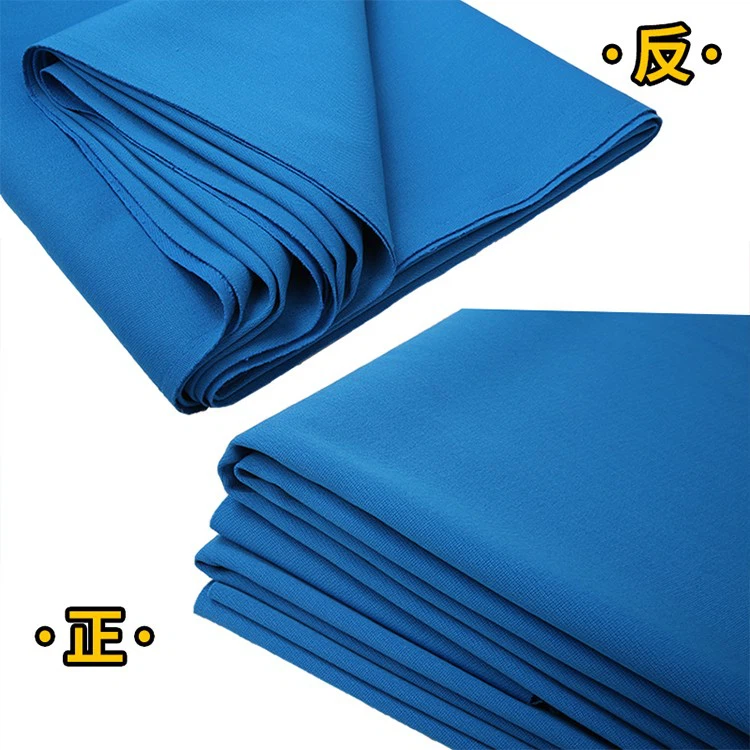
In addition to the cue itself, accessories can also play a role in making a cue more adaptable to different games. For example, Championship Pool Table Cloth can affect the way the balls move on the table. A high - quality cloth can provide a consistent playing surface, regardless of the game being played. This can help mitigate some of the differences in ball movement between different games, making it easier to use the same cue.
Similarly, Professional Billiard Balls can also impact the performance of a cue. Using high - quality balls that are properly balanced and sized can ensure a more consistent and predictable game, regardless of the type of billiards being played.
Conclusion and Call to Action
In conclusion, while it is possible to use a billiard pool cue for different types of billiard games, there are certain factors to consider. The tip size, shaft taper, and weight of the cue all play important roles in determining its suitability for different games. However, with the right cue and a willingness to adjust your playing technique, you can enjoy multiple billiard games with a single cue.
As a supplier of Billiard Pool Cue, we offer a wide range of cues to suit different playing styles and game preferences. Whether you're a professional player or just starting out, we have the perfect cue for you. If you're interested in learning more about our products or have any questions about using a cue for different games, we encourage you to reach out to us for a procurement discussion. We're here to help you find the best billiard equipment to enhance your playing experience.
References
- Carom and Pocket Billiards: Principles and Techniques by Mike Shamos
- The Official Rules of Snooker and Billiards by World Snooker


