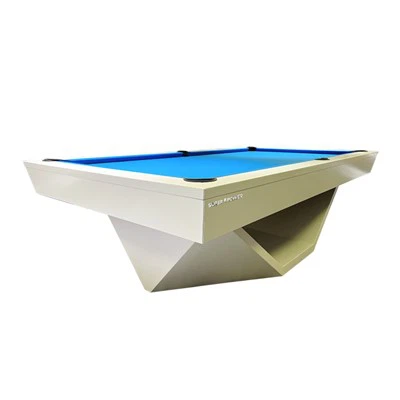
Aligning the pockets on a 10 - foot snooker table is a meticulous process that requires precision, patience, and a good understanding of the game's requirements. As a supplier of 10 Snooker Table, I've encountered numerous inquiries regarding this crucial aspect of snooker table setup. In this blog, I'll share some insights and steps to help you align the pockets on a 10 - foot snooker table effectively.


Understanding the Importance of Pocket Alignment
Proper pocket alignment is essential for a fair and enjoyable game of snooker. Misaligned pockets can lead to inconsistent ball behavior, making it difficult for players to predict the path of the balls accurately. This can result in frustration and a less satisfying playing experience. Moreover, in competitive settings, accurate pocket alignment is crucial to ensure a level playing field for all participants.
Tools Required for Pocket Alignment
Before you start aligning the pockets, you'll need to gather the necessary tools. These include:
- Measuring Tape: A high - quality measuring tape is essential for taking accurate measurements. You'll need to measure the distances between the pockets and ensure they are consistent across the table.
- Spirit Level: A spirit level helps you ensure that the table is perfectly horizontal. This is important because an uneven table can affect the ball's roll and the pocket's alignment.
- Allen Keys: Most snooker tables use Allen screws to secure the pockets. You'll need the appropriate size of Allen keys to make any necessary adjustments.
- Pocket Templates: Pocket templates can be very helpful in ensuring that the pockets are the correct size and shape. You can purchase these templates or make your own using cardboard or wood.
Step - by - Step Guide to Pocket Alignment
Step 1: Prepare the Table
First, make sure the table is clean and free of any debris. Remove all the balls, cushions, and pockets from the table. Use a soft cloth to wipe the playing surface to ensure it's clean and smooth. Check the table's level using a spirit level. Place the level in the center of the table and at each corner. Adjust the table's legs if necessary to make it perfectly horizontal.
Step 2: Mark the Pocket Positions
Refer to the table's specifications to determine the exact positions of the pockets. Mark these positions on the table using a pencil or masking tape. Make sure the marks are clear and accurate. The distance between the corner pockets and the side pockets should be consistent according to the standard measurements for a 10 - foot snooker table.
Step 3: Install the Pockets
Carefully place the pockets in their marked positions. Use the Allen keys to secure the pockets to the table. Make sure the pockets are firmly attached and do not move. Check the alignment of each pocket using a pocket template. Ensure that the pocket opening is the correct size and shape. If the pocket is misaligned, loosen the Allen screws and make the necessary adjustments.
Step 4: Check the Pocket Alignment
Once all the pockets are installed, it's time to check their alignment. Use a measuring tape to measure the distances between the pockets. The distances should be consistent across the table. Check the diagonals of the table as well. The diagonal distances between opposite corner pockets should be equal. If you find any discrepancies, make the necessary adjustments to the pocket positions.
Step 5: Test the Pockets
After checking the alignment, it's a good idea to test the pockets. Roll a few balls into the pockets to see how they behave. The balls should enter the pockets smoothly and without any obstruction. If you notice any issues, such as balls bouncing out of the pockets or getting stuck, you may need to make further adjustments to the pocket alignment or the pocket opening size.
Common Mistakes to Avoid
- Not Using Accurate Measurements: One of the most common mistakes is not using accurate measurements when aligning the pockets. Always use a high - quality measuring tape and double - check your measurements.
- Ignoring the Table's Level: An uneven table can cause the pockets to appear misaligned even if they are installed correctly. Make sure the table is perfectly horizontal before aligning the pockets.
- Rushing the Process: Pocket alignment is a detailed process that requires patience. Rushing through the steps can lead to inaccurate alignment and a sub - standard playing experience.
Alternative Table Options
In addition to our standard 10 Snooker Table, we also offer other types of snooker tables, such as Small Slate Bed Snooker Table for those with limited space and Marble Snooker Table for a more luxurious playing experience. These tables also require proper pocket alignment, and the general principles discussed in this blog can be applied to them as well.
Conclusion and Call to Action
Aligning the pockets on a 10 - foot snooker table is a complex but rewarding process. By following the steps outlined in this blog and using the right tools, you can ensure that your snooker table provides a fair and enjoyable playing experience. If you're in the market for a high - quality 10 - foot snooker table or need further assistance with pocket alignment, we're here to help. Contact us to discuss your requirements and explore our range of products. We look forward to working with you to create the perfect snooker setup.
References
- "The Complete Guide to Snooker Table Setup" by Snooker World Publications
- "Snooker Table Maintenance and Repair" by Billiards Experts Association