

Hey there! As a supplier of Chinese snooker tables, I know how important it is to have a properly aligned table for a great game. One crucial aspect of a snooker table is the alignment of its pockets. In this blog, I'll share with you how to check the alignment of the pockets on a Chinese snooker table.
Why Pocket Alignment Matters
Before we dive into the checking process, let's talk about why pocket alignment is so important. When the pockets are correctly aligned, it ensures a fair and consistent game. A misaligned pocket can affect the way the balls roll and fall into the pockets, leading to inaccurate shots and an unfair playing experience. Plus, it can also cause unnecessary wear and tear on the table and the balls. So, getting the pocket alignment right is essential for a high - quality playing environment.
Tools You'll Need
To check the alignment of the pockets on your Chinese snooker table, you're going to need a few basic tools:
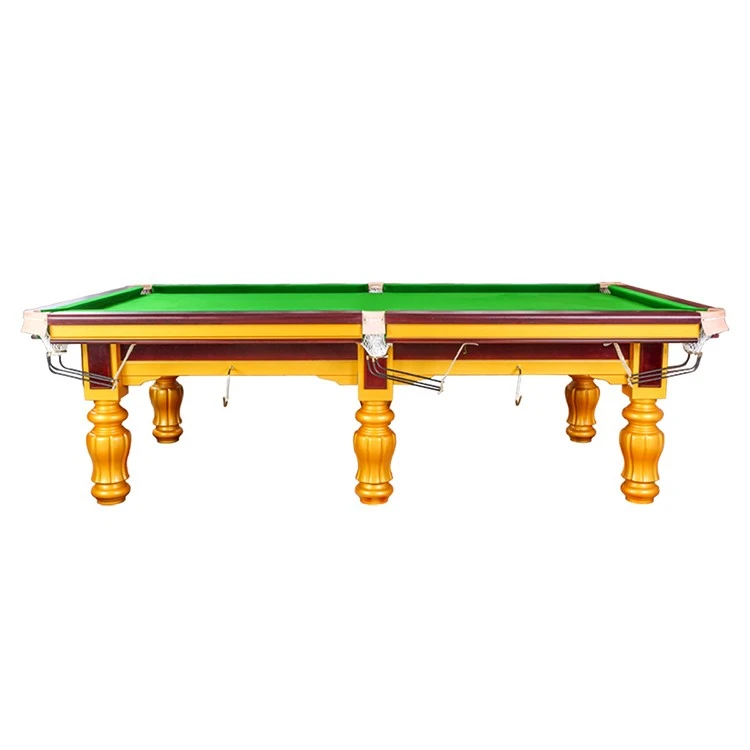

- A straightedge: This could be a long, flat piece of wood or metal. It'll help you check if the edges of the pockets are in a straight line.
- A spirit level: This is used to make sure the table surface is level. An uneven table can throw off the pocket alignment.
- Measuring tape: You need this to measure the dimensions of the pockets and ensure they're consistent across the table.
Step 1: Check the Table Level
The first step is to ensure that your snooker table is level. Place the spirit level at different points across the table surface, including the center and the four corners. If the bubble in the spirit level is not centered, it means the table is not level. You may need to adjust the table legs using the leveling screws. Make sure to check the level in both the lengthwise and widthwise directions. A level table provides a stable base for accurate pocket alignment.
Step 2: Examine the Pocket Entrances
Use your straightedge to check the straightness of the pocket entrances. Place the straightedge along the front edge of each pocket. If there are any gaps between the straightedge and the pocket edge, it indicates a misalignment. You should check all six pockets on a standard Chinese snooker table - the four corner pockets and the two side pockets. Any irregularities in the pocket entrances can cause the balls to bounce off unevenly and not fall into the pockets as expected.
Step 3: Measure the Pocket Dimensions
Grab your measuring tape and measure the width and depth of each pocket. On a Chinese snooker table, the pocket dimensions should be consistent. For example, a well - made table should have corner pockets that are slightly smaller in width compared to the side pockets. Usually, corner pockets are around 3.5 inches wide, while side pockets are about 4 inches wide. Any significant deviation in these measurements could mean misaligned pockets. If you find that one pocket is much larger or smaller than the others, it's a sign that something is wrong with the alignment.
Step 4: Check the Pocket Inserts
The pocket inserts are the rubber lining inside the pockets. They play an important role in how the balls enter the pockets. Make sure the pocket inserts are properly installed and not loose or damaged. A loose or damaged insert can cause the balls to deflect in unexpected ways. Inspect each insert carefully and look for signs of wear, such as cracks or fraying. If you notice any issues, you may need to replace the inserts to improve the pocket alignment and the overall performance of the table.
Step 5: Test the Balls
Once you've visually and physically checked the alignment using tools, it's time to test it with actual play. Roll a few balls towards each pocket gently. Observe how the balls enter the pockets. If the balls consistently hit the edges of the pockets and bounce out instead of falling in, or if they seem to veer off to one side when approaching a pocket, it could be due to misaligned pockets. Pay attention to the ball's trajectory and behavior at each pocket during the test.
Common Alignment Issues and Solutions
- Uneven Wear: Over time, some pockets may experience more wear than others, especially the ones that are used more frequently. This can cause the pocket edges to become uneven. If you notice uneven wear, you may need to sand down the rough edges gently to make them smooth again.
- Loose Pocket Fittings: Sometimes, the pocket fittings can become loose due to regular use. Check the screws and bolts that hold the pockets in place. If they're loose, tighten them up using the appropriate tools.
- Table Movement: If the table has been moved or bumped, it can affect the pocket alignment. In this case, you may need to re - check and re - adjust the alignment following the steps mentioned above.
Our Chinese Snooker Tables
At our company, we take pride in providing high - quality Chinese snooker tables. We ensure that each table undergoes strict quality control, including thorough pocket alignment checks. Our 8ft Slate Bed Snooker Table is a popular choice among players. It offers a smooth playing surface and well - aligned pockets for an excellent gaming experience.
If you're looking for something different, our Chinese Pool Table No Pockets is a unique option. It can be used for different types of games or just for practicing ball control. And for fans of 8 - ball pool, our 8 Ball Pool in Chinese table is designed to meet the specific requirements of this classic game.
Conclusion
Checking the alignment of the pockets on a Chinese snooker table is crucial for a great playing experience. By following the steps outlined in this blog, you can ensure that your table is in top - notch condition. If you have any questions about pocket alignment, or if you're interested in purchasing a new Chinese snooker table, don't hesitate to reach out. We're here to help you get the best table for your needs and ensure you have hours of fun playing snooker.
References
- Snooker Table Handbook: A Guide to Maintenance and Upkeep
- Professional Snooker Player's Tips on Table Setup


