

As a supplier of Billiard Pool Cues, I've had the privilege of witnessing the passion and dedication that players bring to the game. Over the years, I've gathered insights into the best ways to practice with a billiard pool cue, and I'm excited to share them with you.
Understanding Your Billiard Pool Cue
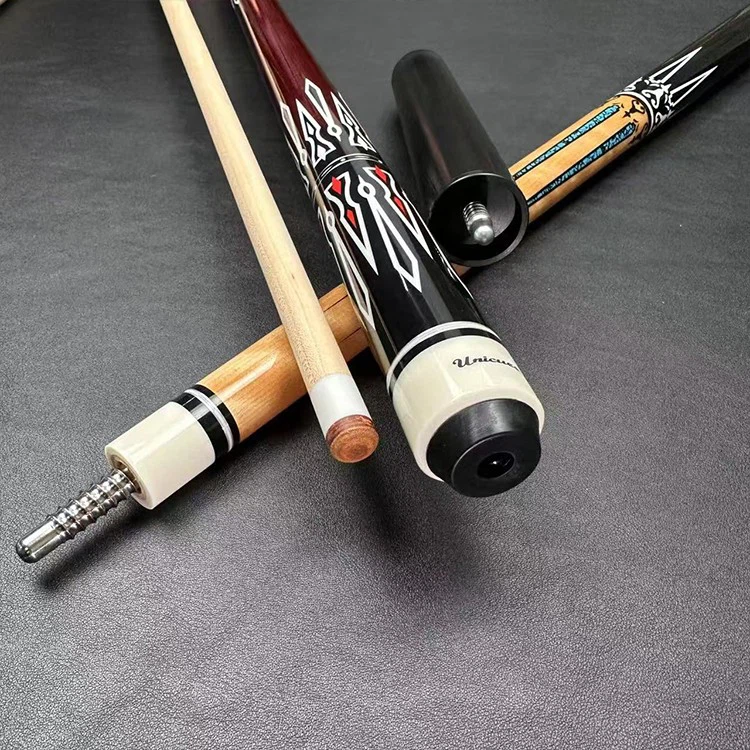
Before diving into practice techniques, it's crucial to understand your Billiard Pool Cue. Each cue has its unique characteristics, including weight, balance, and tip hardness. These factors can significantly impact your performance on the table.
The weight of a cue can affect your stroke and control. A heavier cue may provide more power, while a lighter cue can offer greater finesse. Experiment with different weights to find the one that suits your playing style. Balance is also essential, as it ensures a smooth and consistent stroke. A well-balanced cue will feel comfortable in your hand and help you maintain control throughout your shot.
The tip of your cue is another critical component. The hardness of the tip can influence the amount of spin and control you have over the cue ball. Soft tips tend to grip the ball better, allowing for more spin, while hard tips provide a more direct and powerful hit. Choose a tip hardness based on your playing preferences and the type of shots you commonly make.
Setting Up Your Practice Environment
Creating the right practice environment is essential for improving your skills. Start by investing in high-quality equipment, such as Professional Billiard Balls and Championship Pool Table Cloth. These products can enhance the accuracy and consistency of your shots.

Ensure that your pool table is level and in good condition. A不平的 table can cause the balls to roll unevenly, making it difficult to practice effectively. Regularly clean and maintain your table to keep it in optimal playing condition.
Find a quiet and distraction-free space to practice. This will allow you to focus on your shots and improve your concentration. Consider using a practice aid, such as a cue ball holder or a shot tracker, to help you analyze your performance and identify areas for improvement.
Mastering the Basics
Before attempting advanced shots, it's important to master the basics of billiards. Start by practicing your stance, grip, and stroke. A proper stance provides a stable foundation for your shot and helps you maintain balance and control. Stand with your feet shoulder-width apart, with your dominant foot slightly forward. Keep your body relaxed and your eyes focused on the target ball.
Your grip on the cue is also crucial. Hold the cue firmly but not too tightly, with your thumb and index finger forming a V shape around the cue. Keep your wrist loose and flexible to allow for a smooth and fluid stroke.
A consistent stroke is the key to accurate shots. Practice your stroke by making slow, controlled movements, focusing on keeping the cue straight and level. Use your arm and shoulder muscles to generate power, rather than relying on your wrist. Aim for a smooth and even follow-through, extending your arm fully after making contact with the cue ball.
Practicing Specific Shots
Once you have mastered the basics, you can start practicing specific shots to improve your skills. One of the most important shots in billiards is the straight shot. To practice this shot, place the cue ball and the target ball in a straight line, with the target ball close to a pocket. Aim for the center of the target ball and make a smooth, straight stroke. Focus on hitting the ball with the center of the cue tip to ensure a clean and accurate shot.
Another essential shot is the bank shot. This shot involves hitting the cue ball off the rail and into the target ball. To practice this shot, place the cue ball and the target ball near a rail. Aim for the point on the rail where you want the cue ball to bounce off, and make a smooth stroke. Pay attention to the angle of the shot and the speed of the cue ball to ensure a successful bank shot.
The combination shot is also a useful technique to master. This shot involves hitting one ball into another to pocket the target ball. To practice this shot, set up a combination of balls on the table and aim for the first ball in the sequence. Make a smooth stroke and watch as the balls collide and the target ball is pocketed. Focus on the angles and the speed of the shots to ensure a successful combination shot.
Using Practice Drills
Practice drills are a great way to improve your skills and consistency. One popular drill is the ghost ball drill. This drill involves imagining a ghost ball in the position where the cue ball needs to be in order to pocket the target ball. Aim for the center of the ghost ball and make a smooth stroke. This drill helps you improve your aim and your ability to visualize the path of the cue ball.
Another useful drill is the one-pocket drill. This drill involves trying to pocket all the balls on the table into a single pocket. Start by placing the balls randomly on the table and choose a pocket to aim for. Make a series of shots, trying to pocket as many balls as possible into the chosen pocket. This drill helps you improve your shot selection, your ability to plan ahead, and your overall strategy.
The safety shot drill is also a valuable exercise. This drill involves making a shot that leaves the opponent in a difficult position. Practice making safety shots by placing the cue ball and the target ball in different positions on the table and trying to find the best shot to leave the opponent with a difficult shot. This drill helps you improve your defensive skills and your ability to think strategically.
Analyzing Your Performance
To improve your skills, it's important to analyze your performance regularly. Keep a record of your practice sessions, including the shots you made, the shots you missed, and the areas where you need to improve. Use this information to identify patterns and trends in your playing style and to develop a plan for improvement.
You can also analyze your performance by watching videos of your practice sessions or by playing against more experienced players. Pay attention to their techniques, their shot selection, and their strategies. Try to learn from their mistakes and their successes, and incorporate their techniques into your own playing style.
Conclusion
Practicing with a billiard pool cue requires patience, dedication, and a willingness to learn. By understanding your cue, setting up a proper practice environment, mastering the basics, practicing specific shots, using practice drills, and analyzing your performance, you can improve your skills and become a better billiards player.
If you're interested in purchasing high-quality billiard pool cues or other billiard accessories, please don't hesitate to contact us. We're here to help you find the products that meet your needs and to provide you with the support and guidance you need to improve your game.
References
- "Billiards: The Complete Guide" by John Davis
- "The Art of Billiards" by Robert Byrne
- "Advanced Billiards Techniques" by Mike Massey


