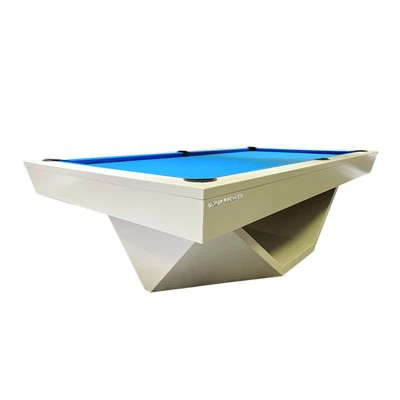
Hey there, pool enthusiasts! As a French pool table supplier, I've had the privilege of getting up close and personal with a wide range of pool table models. One question that often pops up is, "What's the difference in pocket size between different models of French pool tables?" Well, let's dive right in and explore this topic.
First off, it's important to understand that French pool tables come in various types, each with its own unique characteristics. The most common types are the carom tables, which are quite different from the pocket pool tables you might be familiar with in other regions.
Carom Tables: No Holes, Different Dynamics
Carom tables, like the Billiard with No Holes, are a distinct breed. These tables don't have pockets at all! Instead of aiming to sink balls into pockets, the goal in carom billiards is to hit two or more balls with the cue ball. This type of play requires a different set of skills and strategies compared to pocket billiards.
Since there are no pockets, the concept of pocket size doesn't really apply here. However, the size and layout of the table still play a crucial role in the game. Carom tables are typically larger than pocket pool tables, with a playing surface that measures around 10 feet by 5 feet. This larger surface area allows for more complex shots and longer runs.
3 Cushion Carom Tables: A Specific Challenge
Another popular type of French pool table is the 3 Cushion Carom Table. In this game, players must hit the opponent's ball and the object ball while making at least three cushions (the rails of the table) before hitting the second ball. This adds an extra layer of difficulty and precision to the game.
The playing surface of a 3 cushion carom table is also quite large, similar to other carom tables. The lack of pockets means that the focus is on the ball's trajectory and the ability to control the cue ball's movement. While there's no pocket size to consider, the width of the cushions and the overall layout of the table can significantly impact the game.
Pocket Pool Tables: Varying Pocket Sizes
Now, let's talk about French pocket pool tables. These tables are more similar to the ones you might find in a typical pool hall, but they still have some unique features. The pocket sizes on French pocket pool tables can vary depending on the model and the intended use of the table.
Some French pocket pool tables have smaller pockets compared to their American counterparts. Smaller pockets make the game more challenging, as it requires greater accuracy to sink the balls. This can be appealing to more experienced players who are looking for a greater test of their skills.


On the other hand, there are also French pocket pool tables with larger pockets. These tables are often more suitable for beginners or casual players, as they make it easier to sink the balls. The larger pockets can also lead to a faster-paced game, as there's less of a chance of the balls getting stuck or not going in.
Factors Affecting Pocket Size
There are several factors that can influence the pocket size of a French pool table. One of the main factors is the type of game that the table is designed for. As mentioned earlier, carom tables don't have pockets, while pocket pool tables can have different pocket sizes depending on the intended level of play.
Another factor is the size of the balls used on the table. French pool tables typically use smaller balls compared to American pool tables. The smaller balls can affect the pocket size, as they require less space to fit into the pockets.
The style and design of the table can also play a role in determining the pocket size. Some tables may have a more traditional design with smaller pockets, while others may have a more modern design with larger pockets.
Why Pocket Size Matters
The pocket size of a pool table can have a significant impact on the game. Smaller pockets make the game more challenging and require greater skill and precision. This can be appealing to serious players who are looking for a competitive edge.
On the other hand, larger pockets make the game more accessible and easier to play. This can be great for beginners or casual players who are just starting out. The larger pockets also allow for a faster-paced game, which can be more exciting for some players.
Choosing the Right Pocket Size
When choosing a French pool table, it's important to consider your skill level and the type of game you want to play. If you're an experienced player looking for a challenge, a table with smaller pockets might be the right choice for you. On the other hand, if you're a beginner or a casual player, a table with larger pockets might be more suitable.
It's also a good idea to try out different tables and see which pocket size feels most comfortable for you. Many pool halls or suppliers offer the opportunity to test out different tables before making a purchase.
Conclusion
In conclusion, the pocket size of French pool tables can vary depending on the type of table and the intended use. Carom tables don't have pockets at all, while pocket pool tables can have different pocket sizes to suit different skill levels and playing styles.
Whether you're a seasoned pro or just starting out, there's a French pool table out there for you. By understanding the differences in pocket size and how they can affect the game, you can make an informed decision when choosing a table.
If you're interested in purchasing a French pool table, I'd love to help you find the perfect one for your needs. Feel free to reach out to me to discuss your options and start the purchasing process. Let's get you set up with a table that will provide hours of fun and entertainment!
References
- Various industry knowledge and experience in the French pool table supply field.